Cameron TA2000 Compressor Overhaul
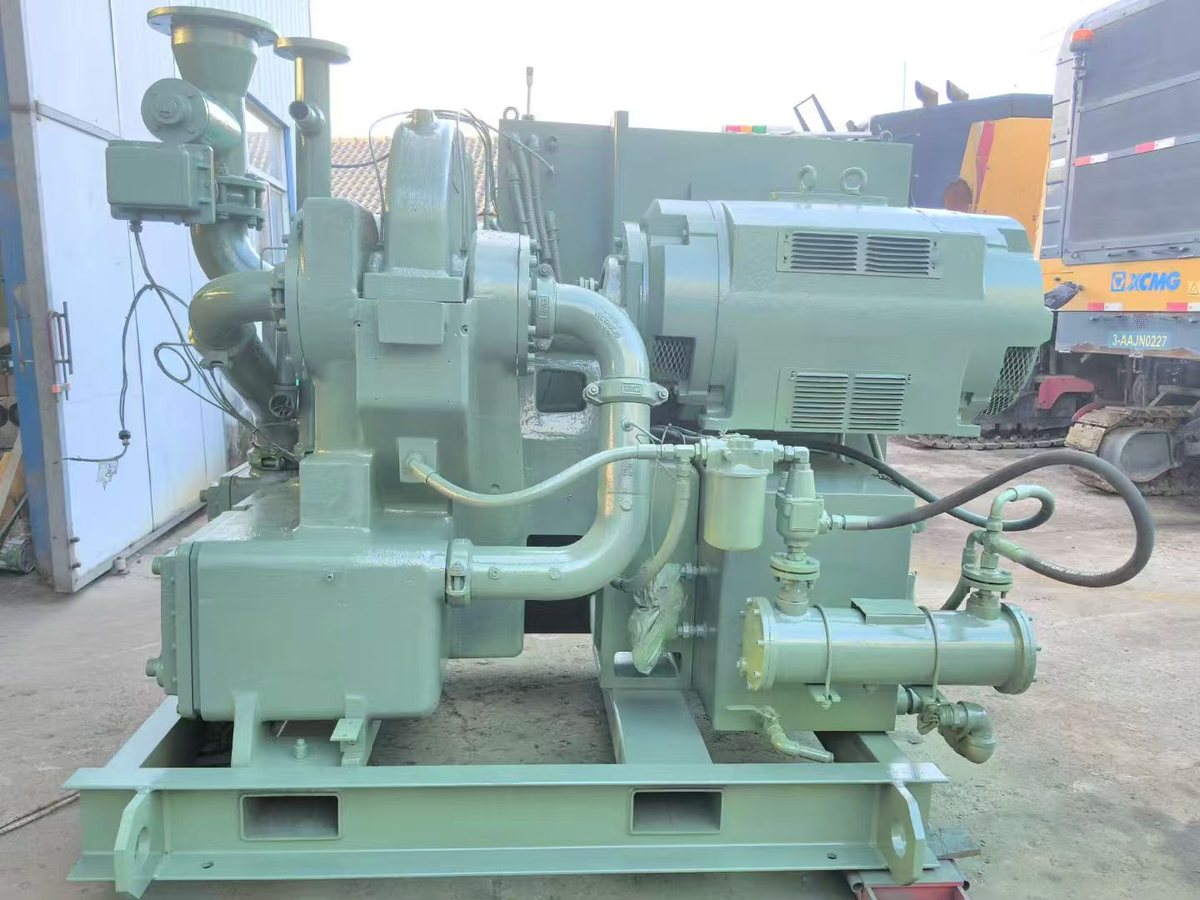
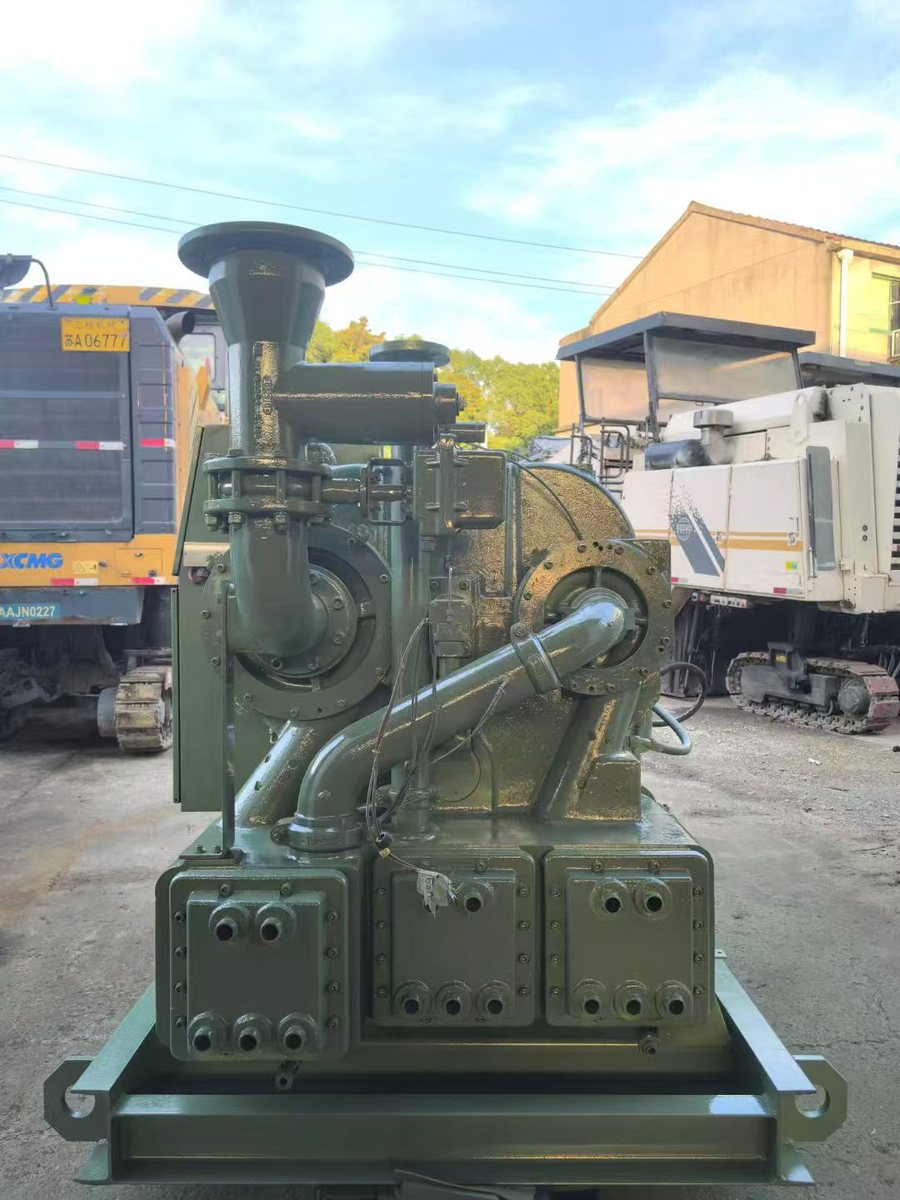
A Cameron TA2000 package stripped, cleaned and rebuilt at Turbomax: the impeller inspected through the inlet, the inlet bell refinished, the cooler water side opened, the gearbox and rotor train checked, and the Maestro Universal control system with its Cameron I/O module verified before the machine left the workshop.
By Evan Chen, Technical Sales Manager, Turbomax · Published 17 November 2026 · Last updated 26 November 2026
Key takeaways from this TA2000 overhaul
- On a TA2000 the first-stage impeller is inspected through the inlet bell, and the bell bore — the surface that sets the impeller inlet clearance — is measured, not just cleaned.
- The cooler water side is opened and the tube plates and pass partitions inspected, because cooler condition decides whether the rebuilt machine reaches its rated flow and discharge temperature.
- Gearbox mesh, bearings and the oil circuit belong in the same job: a rotor-only rebuild leaves whatever the oil system was carrying in place.
- The Maestro Universal controller and Cameron I/O module are verified with parameters recorded before and after, since a mechanical rebuild that ignores the controls can come back with the same trips.
- Clearances, control parameters and a dated photo record travel with the machine.
Planning a TA2000 overhaul? Send the model and serial number — quotation within 24 hours.
OEM-equivalent dimensions · material certificates on request · worldwide shipping
We reply within 24 hours on working days. Send the part number, or a photo of the nameplate if you are unsure.
Quick facts
| Item | Detail |
|---|---|
| Machine | Cameron TURBO-AIR TA2000 integrally geared, oil-free centrifugal air compressor, packaged on one skid |
| Work type | Full overhaul of the mechanical machine plus verification of the control system |
| Air path | Inlet bell removed, first-stage impeller inspected through the inlet, impeller-to-inlet clearance measured |
| Coolers | Water-side covers opened, tube plates and water channels inspected, gaskets renewed |
| Controls | Maestro Universal controller, Cameron I/O module, relays, power supplies, terminals and transmitters checked |
| Reassembly | Clearances and control parameters recorded before the machine leaves the workshop |
| Performed by | Turbomax service team, Suzhou |
Machine background
The Cameron TA2000 sits at the compact end of the TURBO-AIR TA range. Everything is on one skid: the main motor, the gearbox, the compressor casing with its volutes and diffusers, the intercooler and aftercooler section, the oil circuit and the control cabinet. Inside the gearbox a bull gear drives the pinion shafts, and each pinion carries an impeller that works inside its own volute and diffuser. Air enters through the inlet bell above the first stage, is compressed and cooled stage by stage, and leaves through the discharge elbow.
Two things follow from that layout. First, an overhaul is never only a rotor job: the coolers, the inlet bell and the oil circuit sit in the same package and decide whether the rebuilt machine actually delivers its rated flow and discharge temperature. Second, the TA2000 is a controlled machine, not just a mechanical one. The Maestro Universal controller and its Cameron I/O module handle capacity control, surge protection and the alarm chain, so a mechanical rebuild that ignores the control side can come back with the same trips it went in with.
Scope of work
- Package strip-down and cleaning — casings, pipework and mounting faces were cleaned so that corrosion, cracks and previous repairs could be judged on bare metal rather than through dirt and old paint.
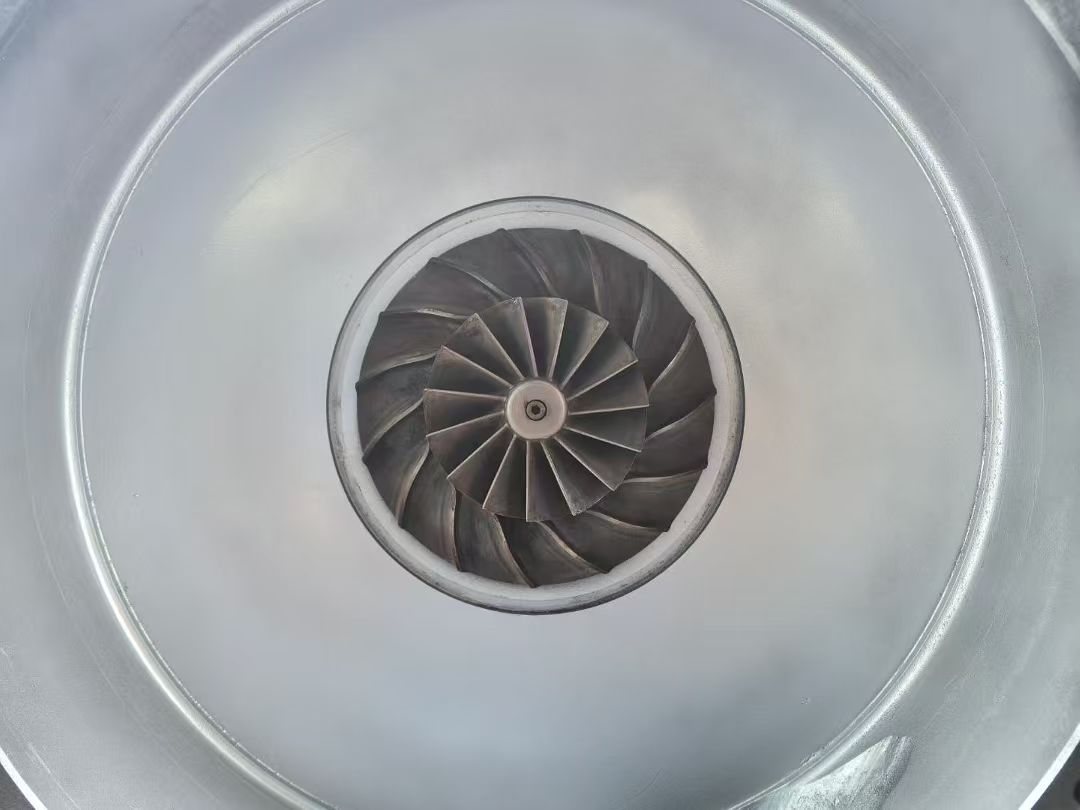
- Inlet and impeller inspection — the inlet bell was removed and the first-stage impeller inspected through the inlet: leading edges, blade tips, deposits, and the impeller nut and its locking.
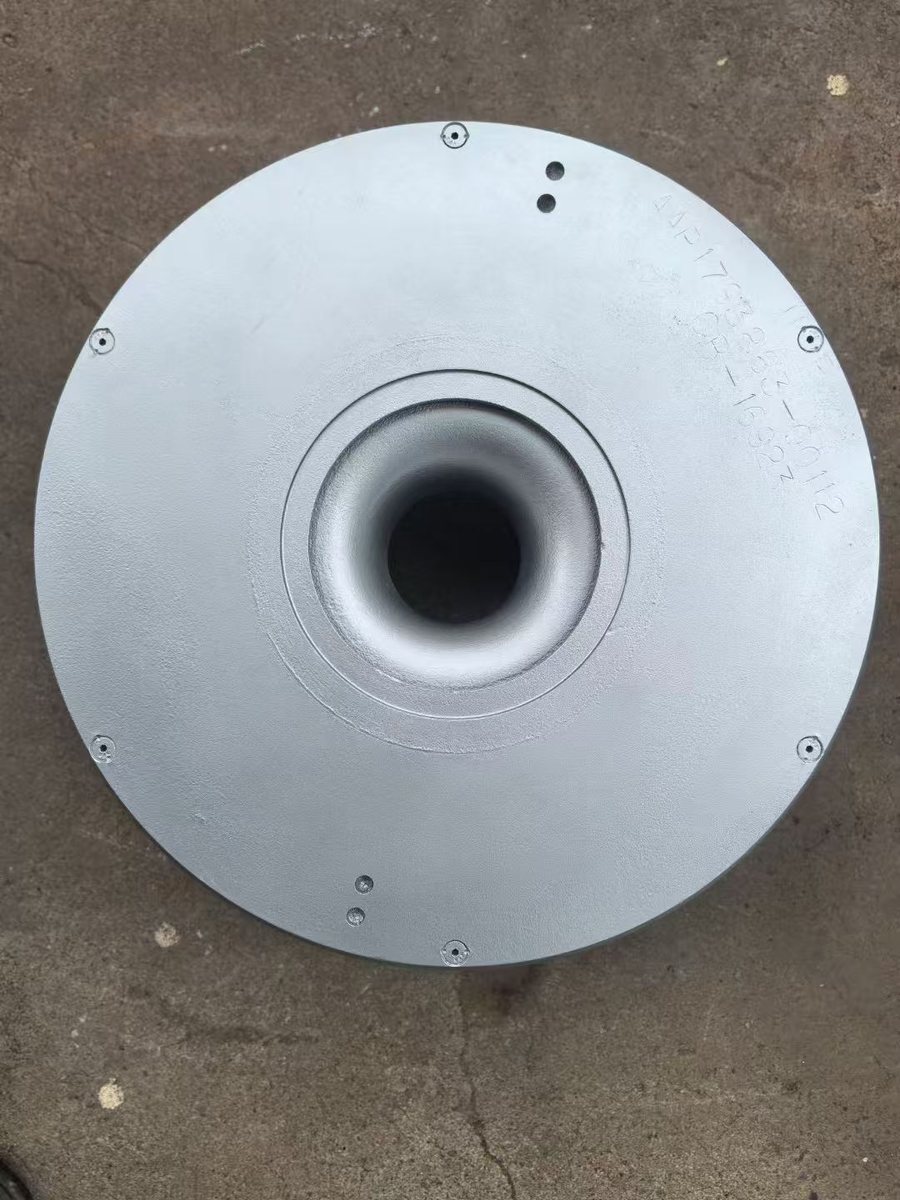
- Inlet bell and scroll refurbishment — the inlet bell faces were cleaned and refinished, the bore that forms the impeller inlet clearance was checked, and the casting numbers were recorded for identification.
- Cooler water side opened — the cooler covers came off so the tube plates, water channels and pass partitions could be inspected for scale, fouling and gasket condition.
- Gearbox, bearings and oil circuit — bull gear and pinion mesh, bearing condition, oil pump, filter and oil piping were checked, and the consumables were renewed.
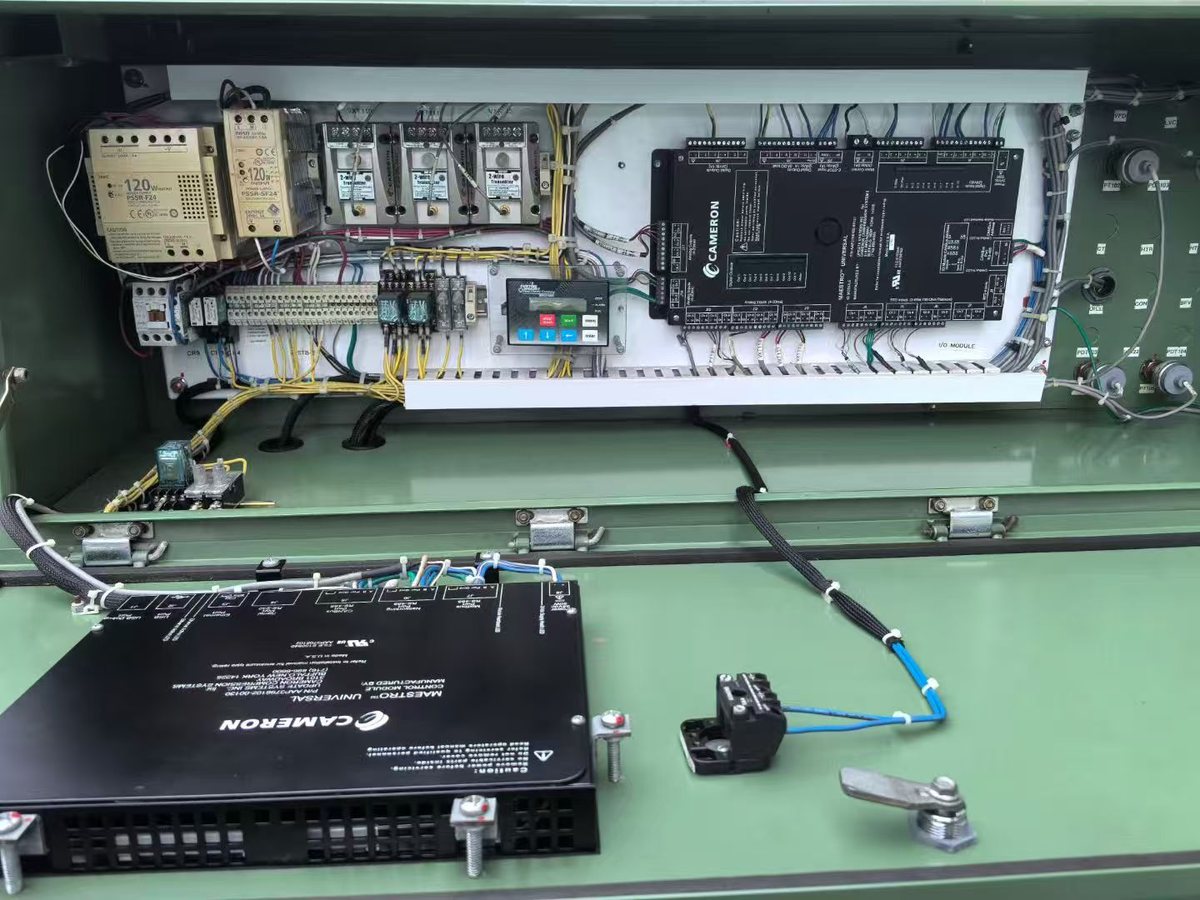
- Control system verification — the Maestro Universal controller, Cameron I/O module, relays, 24 V power supplies, terminal blocks and transmitters were checked, with parameters recorded before and after the work.
Photo record
Reading the impeller through the inlet
The first-stage impeller is the only part of the machine that does aerodynamic work on the incoming air, and it records the whole operating history of the package on its blades. A uniform grey film on the leading edges points to dust getting past the inlet filter; pitting or a sandblasted look at the blade tips points to erosion from carry-over; a greasy deposit points to oil vapour being drawn in from the surrounding plant. Each of these has a different fix, and none of them is solved by changing the impeller alone.
This is why the inlet view matters so much. Before the inlet bell comes off, a performance problem is only a symptom: low flow, high power, or a surge line that seems to have moved. Once the impeller is visible, the cause usually separates quickly into fouling, geometry damage or a clearance problem. Cleaning restores a fouled impeller; it does nothing for a blade whose tip has been eroded back, because the blade geometry — and with it the stage pressure ratio — has already changed.
The inlet bell is a measuring surface, not just a cover
The inlet bell looks like a simple casting, but its bore forms one half of the impeller inlet clearance. Air that leaks back through that gap recirculates inside the stage instead of being compressed, so an oversized or damaged bore costs flow and efficiency even when the impeller itself is perfect. Corrosion pitting, a previous rub, or a face that has been refitted with the wrong gasket thickness all move that gap.
On this machine the bell was cleaned and refinished, and the casting numbers on the rim were recorded. Those numbers matter for more than tidiness: they are what ties the physical part to a drawing, so a replacement bell, a gasket set or a machined repair can be specified against the correct revision instead of being guessed from a photograph.
Why the cooler section decides whether the overhaul worked
On an intercooled centrifugal machine, the coolers set the temperature of the air entering the next stage. Hotter inlet air means less mass flow for the same impeller speed and more power for the same discharge pressure, so a fouled intercooler shows up on the motor ammeter long before it shows up as a leak. The aftercooler then decides how much water condenses out before the air reaches the plant, which is why cooler condition is also an air-quality issue, not only an efficiency issue.
Most of that fouling is on the water side, not the air side. Scale and silt build up in the tubes and in the pass partitions behind the covers, and they cannot be assessed from outside the machine. Opening the water-side covers, as on this TA2000, is the only way to see the tube plates, judge whether chemical cleaning is enough or a bundle needs re-tubing, and replace the gaskets that otherwise start weeping a few weeks after the machine goes back into service.
The control system is half of a TA2000 overhaul
A TA2000 does not run on its mechanical condition alone. The Maestro Universal controller takes pressure, temperature and vibration signals through the Cameron I/O module and uses them for capacity control, surge protection and the alarm and trip chain. A drifting discharge pressure transmitter, a corroded terminal or a failing 24 V supply produces exactly the same symptom as a mechanical fault: unexpected surges, nuisance trips, or a machine that will not load.
The practical consequence is that control checks belong inside the overhaul scope, not after it. On this machine the I/O module, controller, relays, power supplies and terminal blocks were inspected, and the parameters were recorded before work started and verified again after reassembly. That last step is what protects the surge settings and the operating envelope: a mechanically perfect machine with the wrong parameters is still a machine that trips.
What is recorded before the machine leaves
An overhaul is only repeatable if the numbers are written down. For this TA2000 the record covers the impeller-to-inlet clearance, the condition of the gear mesh and bearings, the cooler inspection findings, the renewed seals and gaskets, and the control parameters as found and as left. Photographs are taken at each stage so that the condition before disassembly can be compared with the condition at reassembly, and so the customer can see the inside of their own machine without being in the workshop.
The same discipline applies to any replacement part that goes into the machine. Impellers, diffusers, pinion shafts and cooler bundles can be supplied with dimensional drawings, material certificates and, for rotating parts, dynamic balancing reports, so that what arrives on site is traceable to a drawing rather than to a verbal description.
Proving the TA2000 is back inside its envelope
Closing the casing is the middle of an overhaul, not the end of it. A TA2000 that has been reassembled correctly still has to be shown to be running where the package expects it to run: the surge line in the right place, the stage discharge temperature back to its design approach, the vibration at each pinion at its baseline, and the capacity control moving from full load to unload without a trip.
This is why the control and protection parameters were recorded before the machine was opened and compared again after reassembly. A mechanical rebuild can shift the operating point far enough that an old surge margin or an old setpoint is no longer correct, and a machine that trips on the first hot afternoon is usually a machine whose parameters were never re-checked after the work.
- Vibration baseline per pinion — recorded after run-in and compared against the values taken before the overhaul, not against a generic limit.
- Approach temperature at each cooler — confirms the water side is clean and the renewed gaskets are sealing.
- Surge and capacity-control settings — verified against the as-found record instead of being assumed unchanged.
- Alarm and trip chain — tested end to end, including any transmitter replaced during the work.
- Oil pressure and filter differential — checked at operating temperature, after the new filter elements have seen hot oil.
A short commissioning record of these points, kept with the clearance record from the strip-down, is what makes the next overhaul easier: the next crew starts from measured values rather than from assumptions.
Frequently asked questions
What does a Cameron TA2000 overhaul include?
The mechanical machine and its controls: strip-down and cleaning, impeller inspection through the inlet, inlet bell and clearance checks, cooler water-side opening, gearbox and bearing inspection, seal and gasket renewal, and verification of the Maestro Universal controller, Cameron I/O module, relays, power supplies and transmitters.
What are the signs that a TA2000 needs an overhaul?
Rising discharge temperature with unchanged cooling water, falling pressure or flow at the same motor load, a rising vibration or bearing temperature trend, oil in the condensate, repeated surge or nuisance trips, and fouling visible at the cooler covers.
Can you support the Maestro Universal control system?
Yes. We check the Cameron I/O module, the Maestro Universal controller, relays, 24 V power supplies, terminals and transmitters, replace faulty items, and record the parameters before and after the work so the surge protection and capacity control behave as they should.
Which TA2000 parts can Turbomax supply?
Impellers, diffusers, inlet bells and scrolls, pinion shaft assemblies, tilting-pad bearings, gears, seals, cooler bundles and gaskets, inlet guide valves, filters, and control items such as transmitters, relays and I/O modules. See the Cameron TA2000 spare parts page.
How should I plan the shutdown window?
Plan around parts, not around disassembly. Bearings, seals and gaskets are quick; impellers, diffusers and cooler bundles are made to drawing and must be ordered before the machine is opened. Send the model, serial number and part numbers first so the long-lead items are identified before the shutdown date is fixed.
Can I share this case with my maintenance team or my customer?
Yes. Use the WhatsApp, LinkedIn or email buttons above, or copy the link. The photos and inspection points make it useful for planning a shutdown or for showing an end customer what the work involves.
Need an overhaul or spare parts for your Cameron TA2000?
Send us the compressor model, serial number and the part numbers from the maintenance manual. We will confirm the part list, dimensions and availability before the shutdown window is fixed, and can supply impellers, inlet bells, diffusers, bearings, seals, cooler bundles and control items from stock or to drawing.
Spare parts for this machine
Cameron TA2000 spare parts Impellers Diffusers & inlet scrolls Tilting pad bearings Intercoolers & aftercoolers Control panel & program All component types
Other maintenance cases
Cameron TA3000 overhaul Cameron TA6000 overhaul Cameron TA9000 overhaul Cameron TA11000 overhaul Cameron MSG overhaul IHI TRE100 overhaul IHI TX-A surge diagnosis
Spare parts by model
T2ATXATRATRET3ATRXTA2000TA3000TA6000TA9000TA11000MSG
Related technical guides and component pages
- Cameron TA11000 overhaul — on-site strip-down, impeller, diffuser, pinion shaft, thrust bearing and coolers
- Cameron overhaul checklist — what to prepare before a TA-series machine is opened.
- Cameron Turbo Air TA series guide — where the TA2000 sits in the model range and how the stages and coolers are arranged.
- TA-series cooler guide — cooler types, fouling mechanisms and when a bundle should be re-tubed rather than cleaned.
- Impeller failure causes — how fouling, erosion and clearance loss show up on the blades.
- Centrifugal compressor maintenance grades A to E — how the service grades map onto the work described in this case.