Centrifugal Compressor Key Components
High-value rotating and sealing components for IHI (T2A, TXA, TRA, TRE, T3A, TRX) and Cameron / Cooper / IR centrifugal air compressors — replacement parts, rebuild service and technical support by Turbomax.
At a glance
These are the components that usually decide whether a centrifugal compressor overhaul is a quick service or a long shutdown. Each section below shows what the part does, the failure modes we see most often in the field, and what Turbomax can supply. Every photo on this page was taken on a real job or in our warehouse.
1. Pinion shaft
The pinion shaft is the high-speed shaft of the compressor: it carries one or two impellers on an integrally geared machine and meshes with the bull gear through precision-ground helical teeth. Damage to the gear teeth, worn journal surfaces or a bent shaft will show up as rising vibration and, if ignored, can destroy the impellers and seals around it.
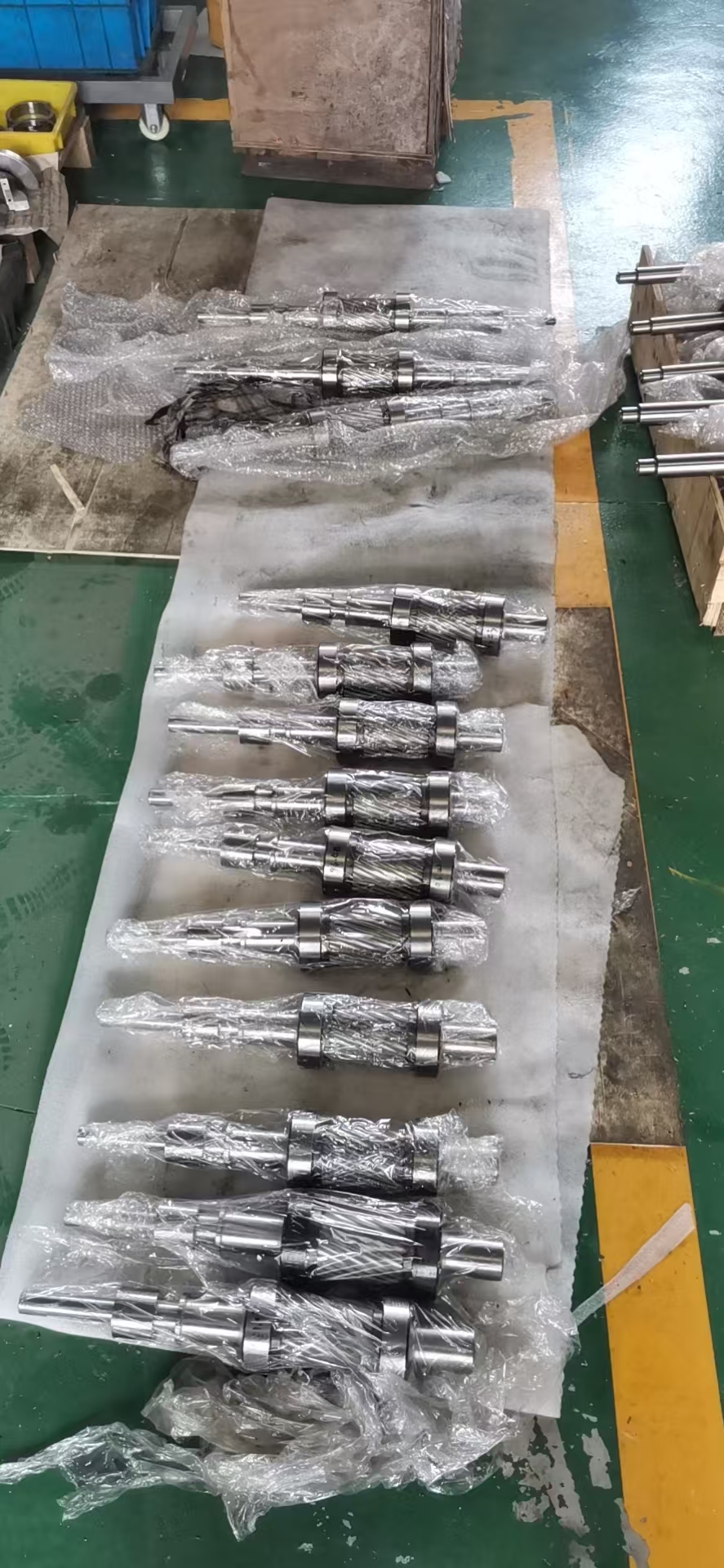
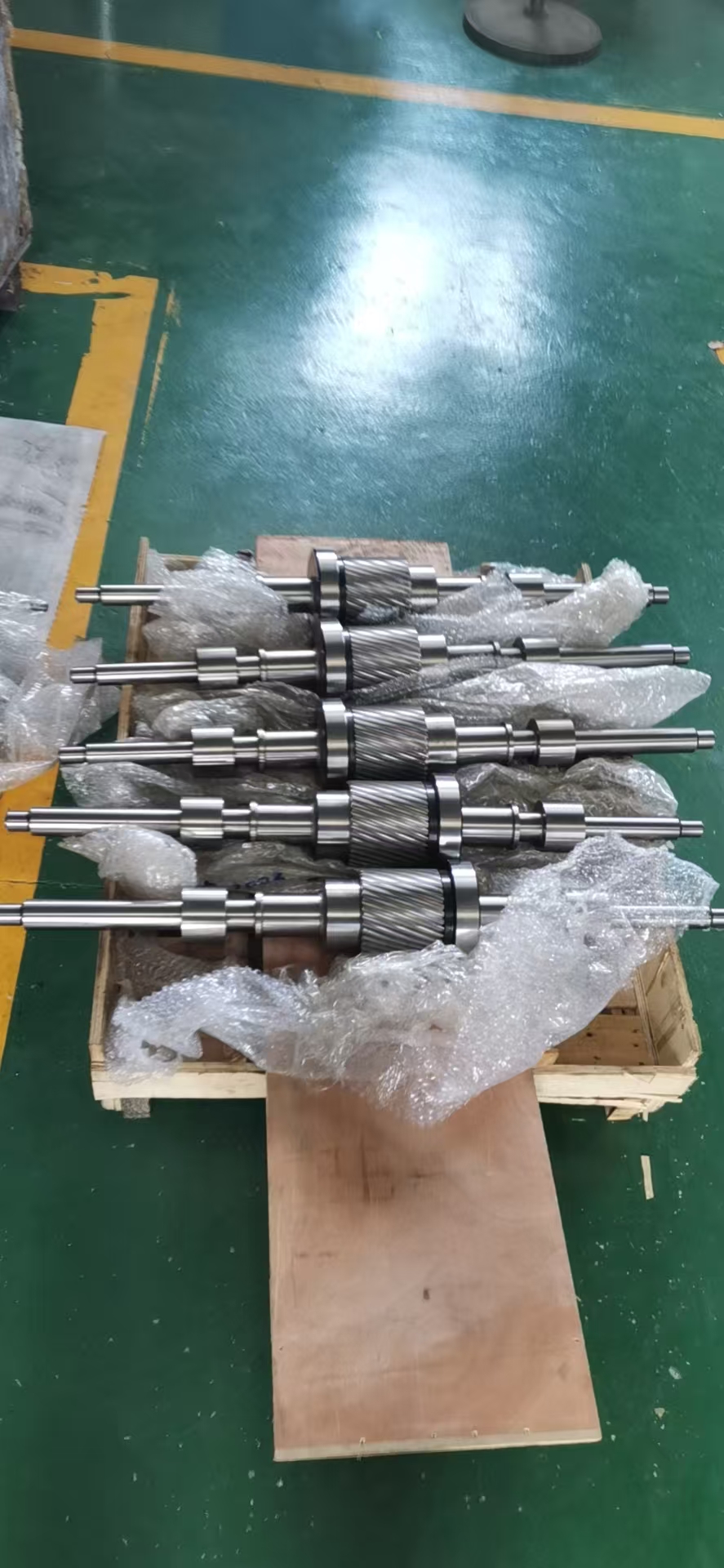
- Fits: IHI T2A, TXA, TRA, TRE, T3A, TRX; Cameron TA and MSG series
- Typical issues: gear tooth pitting and scuffing, worn bearing journals, runout beyond OEM tolerance
- We supply: new pinion shafts and pinion-with-impeller assemblies, with dynamic balancing before delivery
2. Rotor assembly (rotor assembled)
A complete rotor assembly — pinion shaft with impellers mounted and balanced — is the fastest way back to production when a high-speed rotor is broken beyond repair. We delivered exactly this for a TRA 450KW machine whose rotor broke in service: new shaft, new impellers, dynamic balancing and full assembly records.
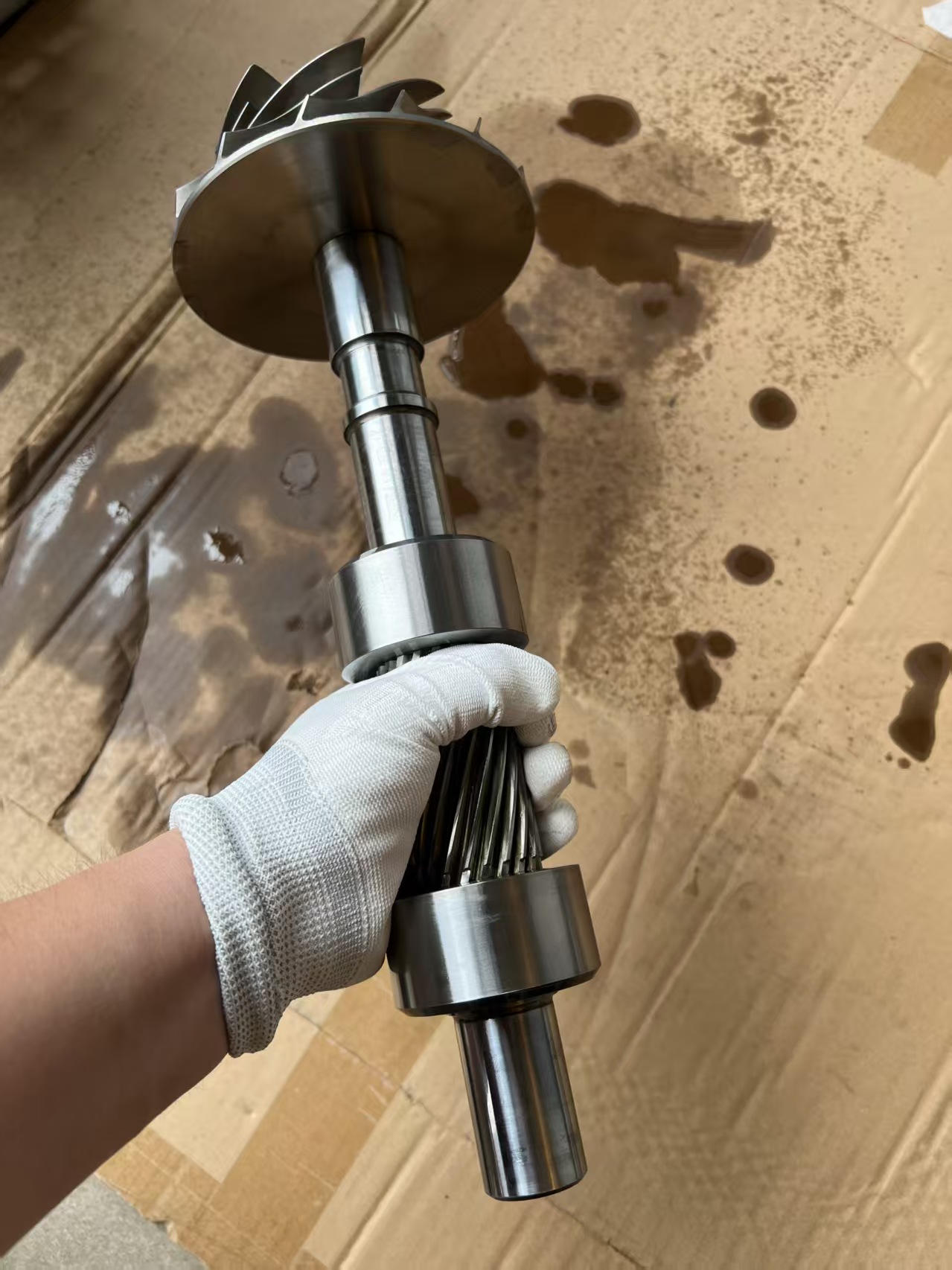
- Fits: IHI TRA, TXA, TRE, TRX and other integrally geared models
- Included: shaft, impellers, thrust disc, dynamic balancing and assembly documentation
- Case: TRA 350KW new rotor case and TRA 450KW new rotor service
3. Bull gear (bullgear)
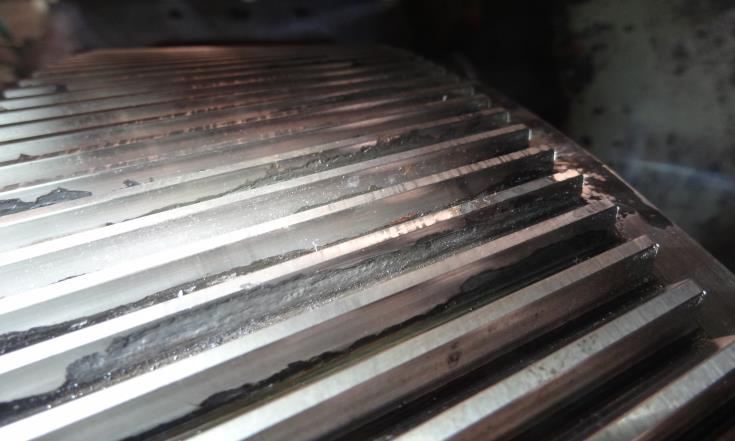
The bull gear is the large low-speed gear that drives all pinion shafts in the gearbox. It runs under continuous load, so tooth wear, scoring or eccentricity shows up as gearbox noise and vibration across every stage. A worn bull gear is one of the most expensive single parts in the machine — and one where a correct replacement pays for itself immediately.
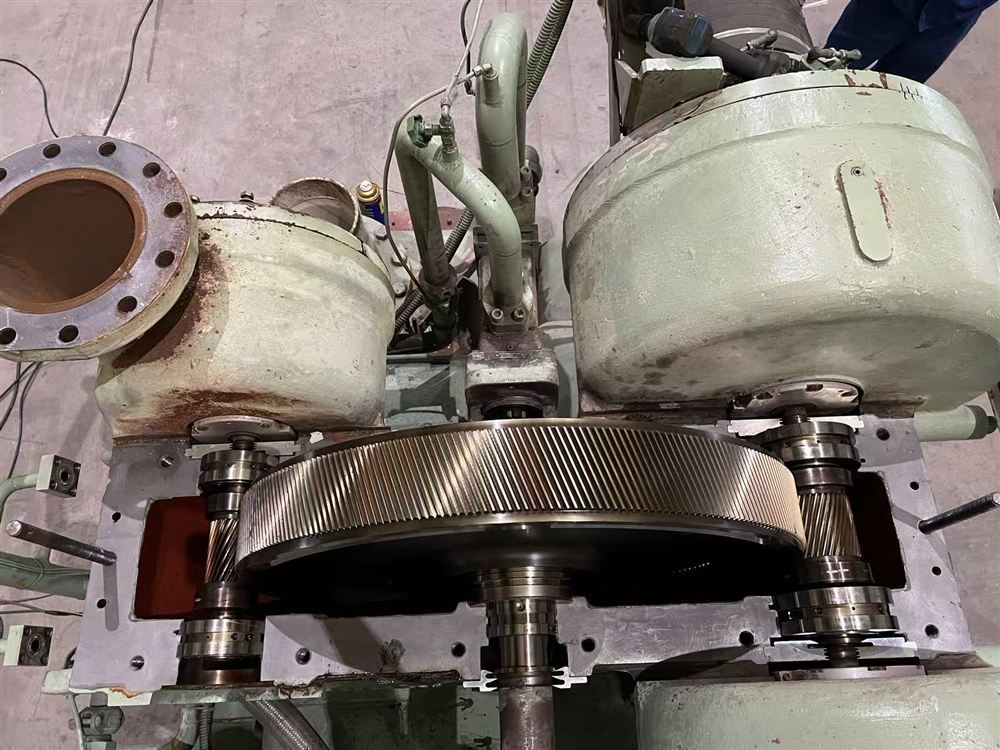
- Fits: IHI TRX, TRE, TRA and Cameron TA / MSG gearboxes
- Typical issues: tooth flank wear, pitting, backlash growth, vibration at gear-mesh frequency
- Case: TRX160 overhaul with new bull gear
4. Main oil pump
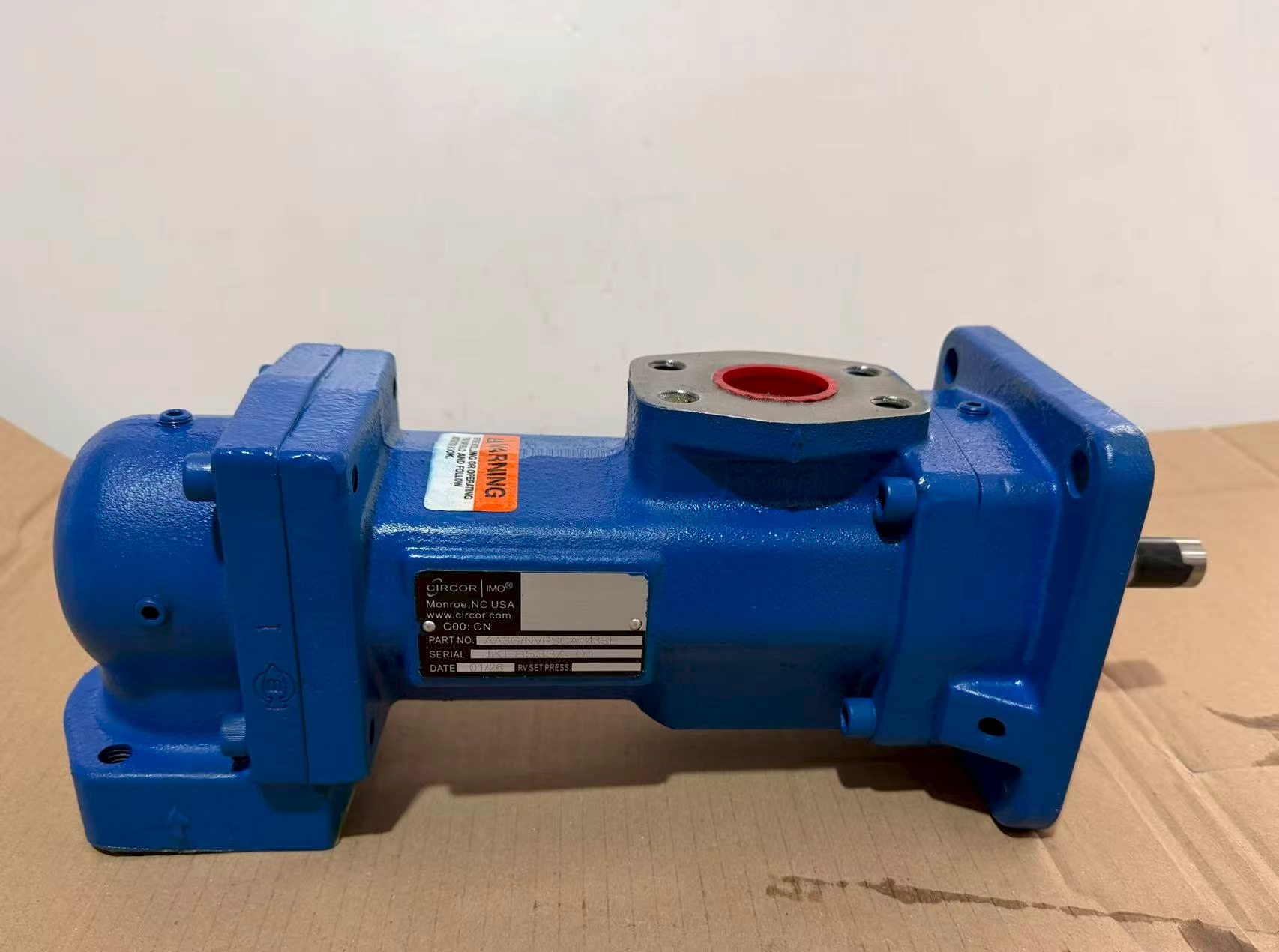
The main oil pump feeds pressurized lube oil to the gears and bearings whenever the machine runs. Loss of discharge pressure here means bearing damage within minutes, so a tired pump is never a "wait and see" item. We supply screw-type replacement pumps (CIRCOR IMO and equivalents) matched to the original flow and pressure rating.
- Fits: IHI and Cameron lube-oil systems using screw-type main pumps
- Typical issues: falling discharge pressure, internal wear, seal leakage, noise
- We supply: complete replacement pumps with matching port connections and relief settings
5. Auxiliary oil pump
The auxiliary oil pump protects the machine during start-up, shutdown and any moment the main pump cannot hold pressure. It is also the part that saves the bearings in a power dip. On overhaul jobs we test auxiliary pump start pressure and cut-in response as a standard checkpoint, and we supply the same screw-pump type as the main pump.
- Fits: IHI and Cameron lube-oil systems (motor-driven auxiliary pumps)
- Typical issues: slow pressure build-up, failure to auto-start, worn screw set
- We supply: replacement auxiliary pumps of the same CIRCOR / IMO type shown above, with motor options
6. Air seal
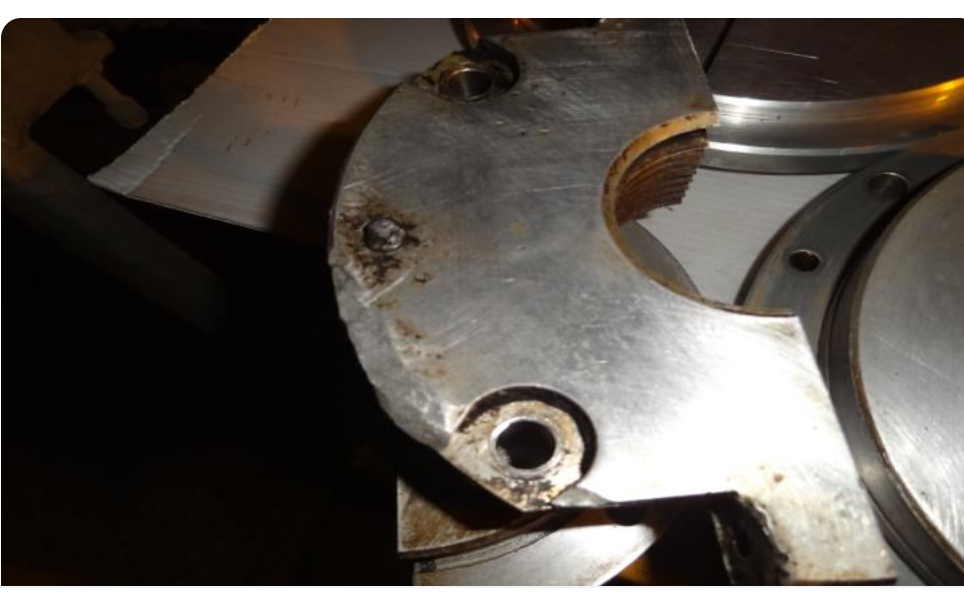
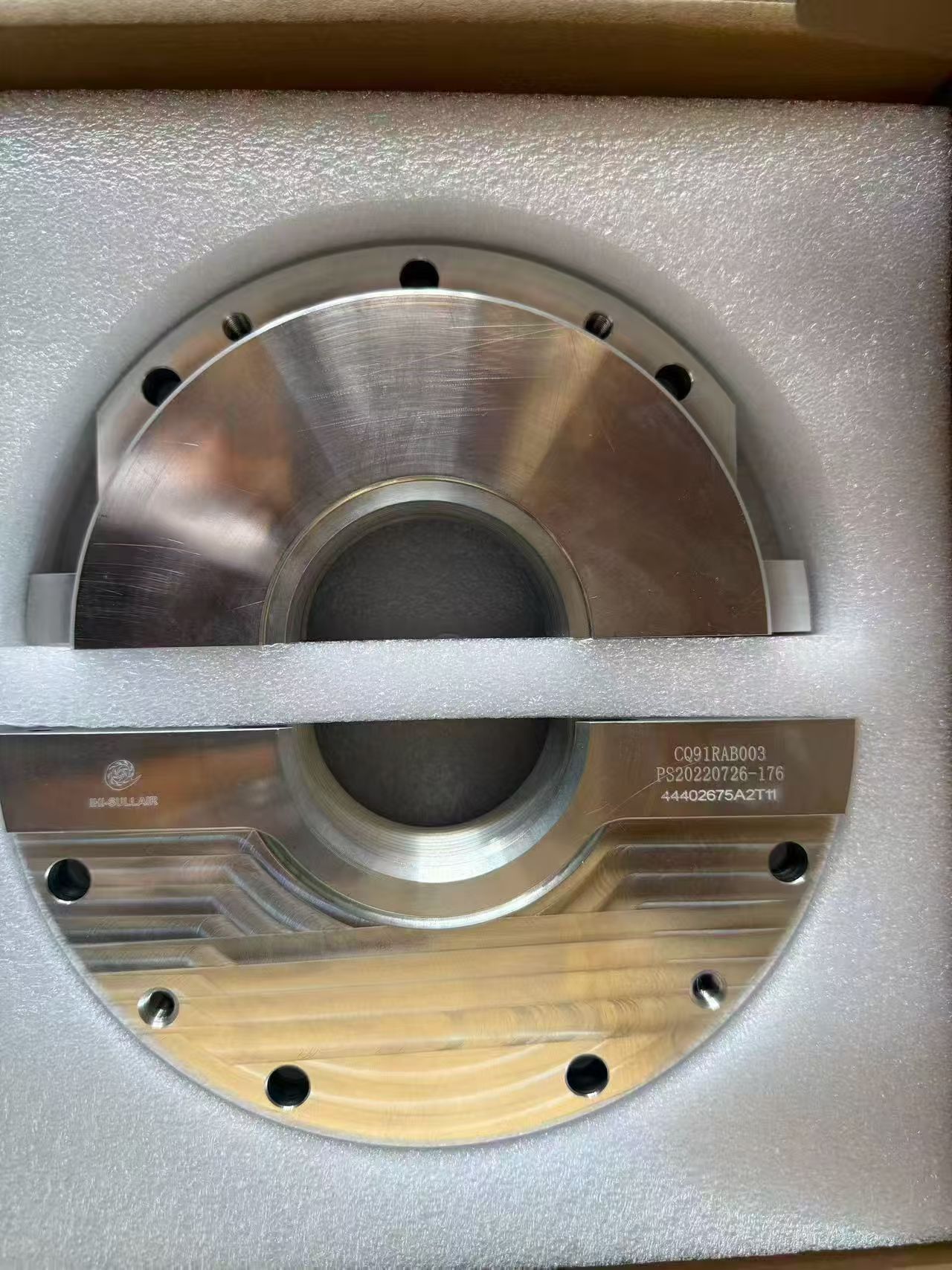
The air seal sits between the compression stage and the bearing housing, keeping compressed air away from the lube oil circuit. A worn air seal lets oil migrate toward the air side (oil carry-over) or lets process air push into the oil tank — both show up first as oil analysis surprises. The two photos below show a ring removed after service and a new replacement ring.
- Fits: IHI T2A, TXA, TRA, TRE, T3A, TRX and Cameron machines
- Typical issues: oil carry-over into the discharge air, oil contamination, rising seal-air differential
- We supply: replacement air seal rings and complete seal sets, inspected and replaced as standard in every overhaul
7. Oil seal
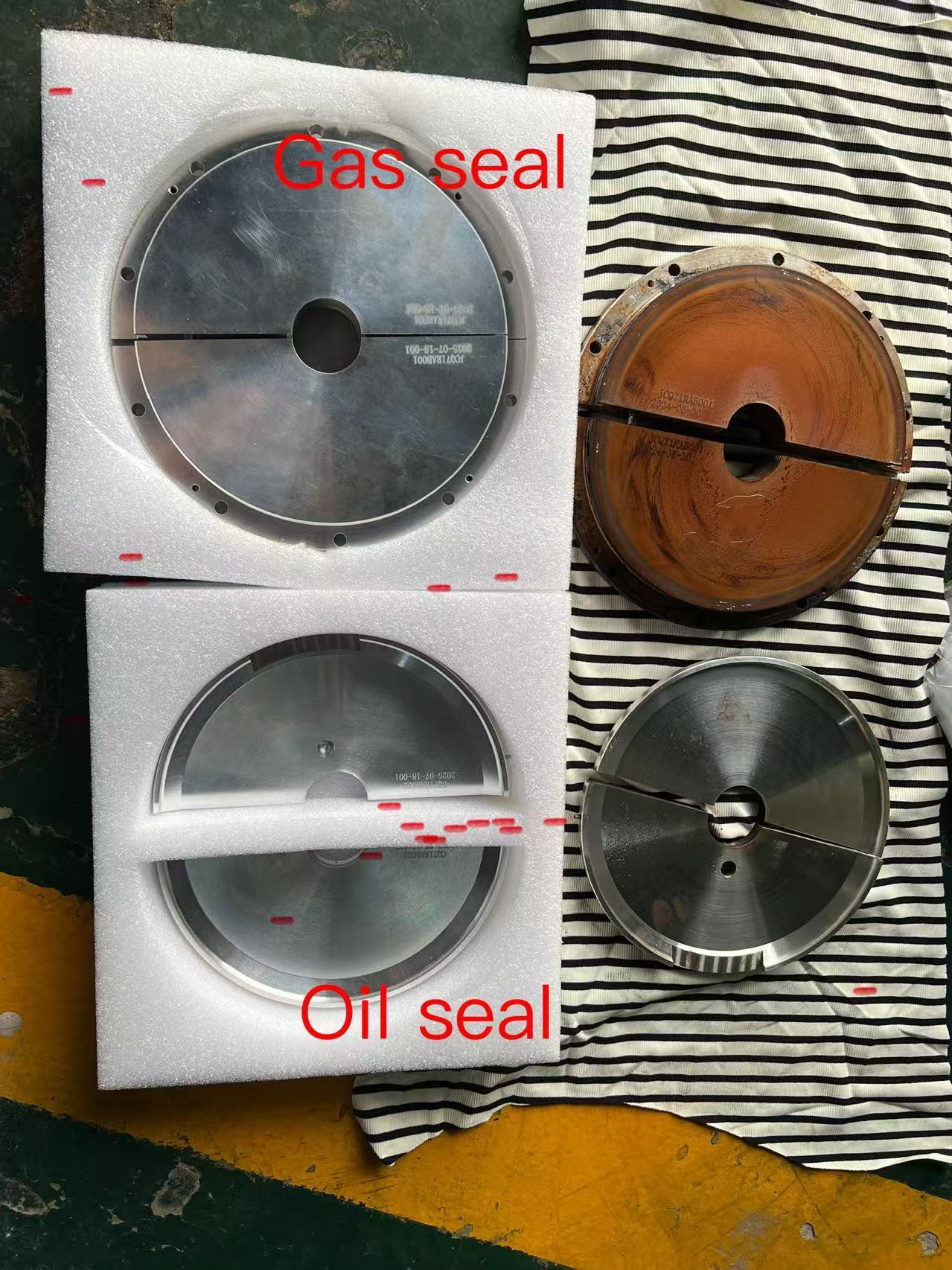
The oil seal keeps lube oil inside the bearing housing. Together with the air seal it forms the barrier that keeps an oil-free machine genuinely oil-free. Seals are always replaced, never reused, at overhaul. The photo shows both seals from one machine: new rings in their packing on the left, the removed rings on the right — gas seal above, oil seal below.
- Fits: IHI T2A, TXA, TRA, TRE, T3A, TRX and Cameron machines
- Typical issues: oil leakage at the bearing housing, oil mist in the motor area, worn split faces
- We supply: oil seal and air seal split rings to OEM dimensions
8. Labyrinth seal
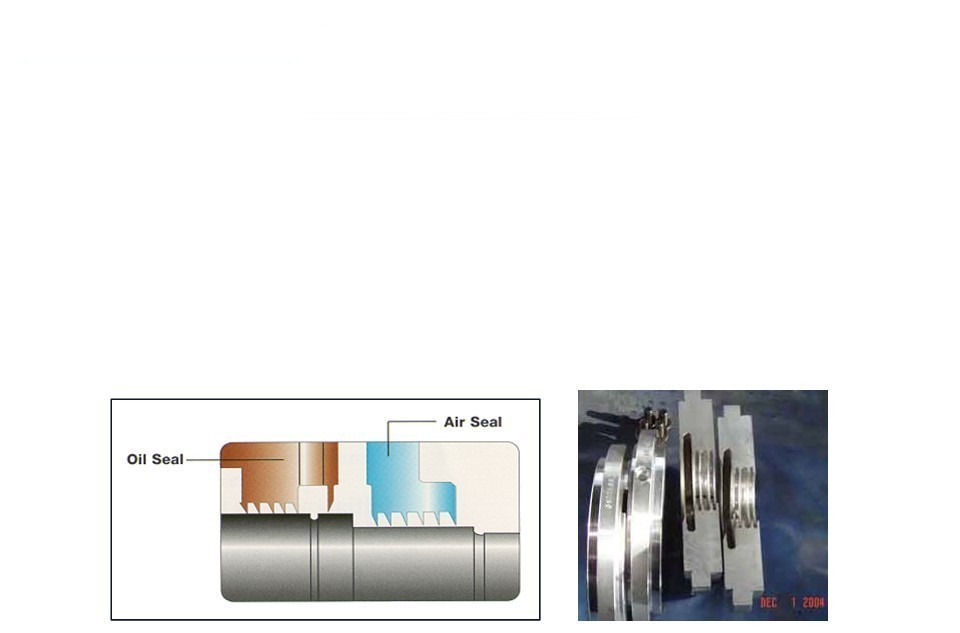
Labyrinth seals are non-contact seals: a series of fine teeth on the shaft or stator throttles leakage along the shaft. They do not wear by friction in normal running, but a single rotor contact event can flatten the teeth and open the leakage path. Seal condition is one of the first things we check when a machine shows stage efficiency loss.
- Fits: IHI interstage and balance-piston positions; Cameron interstage seals
- Typical issues: flattened or rubbed teeth, internal leakage, stage efficiency loss
- We supply: replacement labyrinth seals machined to OEM tooth profile and clearance
9. Inlet scroll
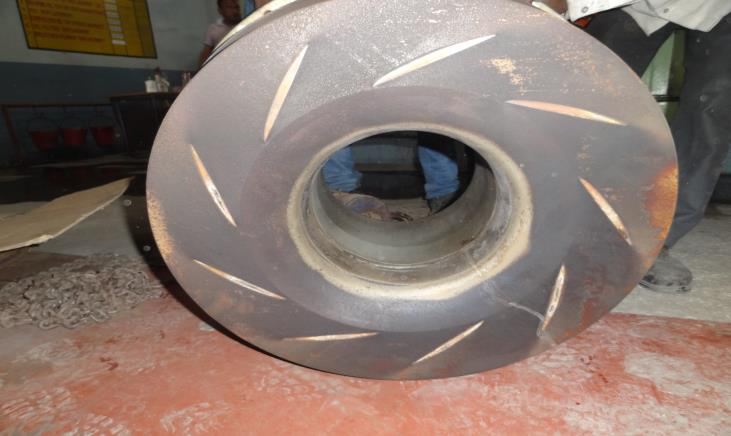
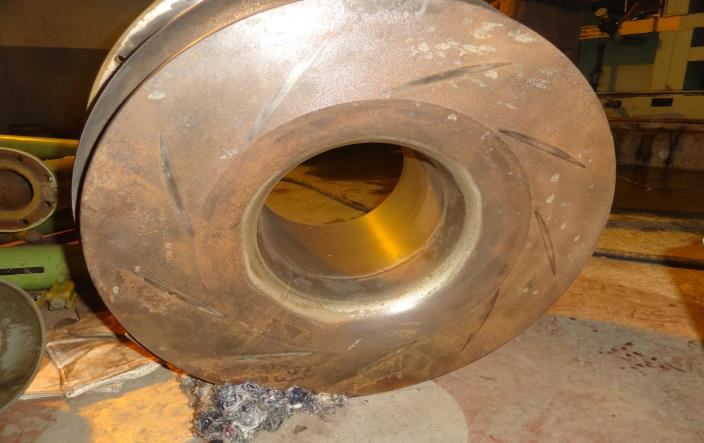
The inlet scroll guides air into the impeller eye. Fouling, corrosion or erosion in the scroll distorts the inlet flow and costs stage efficiency long before anything alarms. On our overhaul jobs every scroll is stripped, cleaned, inspected and repainted — the before/after pair below is from an IHI TRX160 first stage.
- Fits: IHI T2A, TXA, TRA, TRE, T3A, TRX and Cameron stage casings
- Typical issues: fouling, corrosion, erosion at the guide surfaces
- We supply: scroll cleaning and recoating in overhaul, and replacement castings where required
Related component pages
- Centrifugal compressor impellers — 1st, 2nd and 3rd-stage impellers for IHI, Cameron and Atlas Copco machines.
- Diffusers — IHI full series and Cameron TA3000 / TA6000 / TA900 diffusers.
- Tilting-pad bearings — journal and thrust bearings for the same gearboxes.
- Overhaul & rotor replacement service — how these components are inspected and replaced in a real overhaul.
Need a component quotation?
Send us your compressor model (IHI T2A / TXA / TRA / TRE / T3A / TRX, Cameron TA / MSG) and the part name or photo. We reply with availability and lead time.