Inlet Guide Valve (IGV) for Centrifugal Air Compressors
Complete replacement IGV assemblies with actuators for IHI T2A, TXA, TRA, TRE, T3A and TRX, and for Cameron, Cooper, MSG and IR machines — by Turbomax Co., Ltd.
At a glance
- Fits: IHI T2A, TXA, TRA, TRE, T3A and TRX
- Also: Cameron, Cooper and IR machines, including MSG and TA series
- Supply: Complete IGV assembly with actuator, matched to the OEM valve and linkage
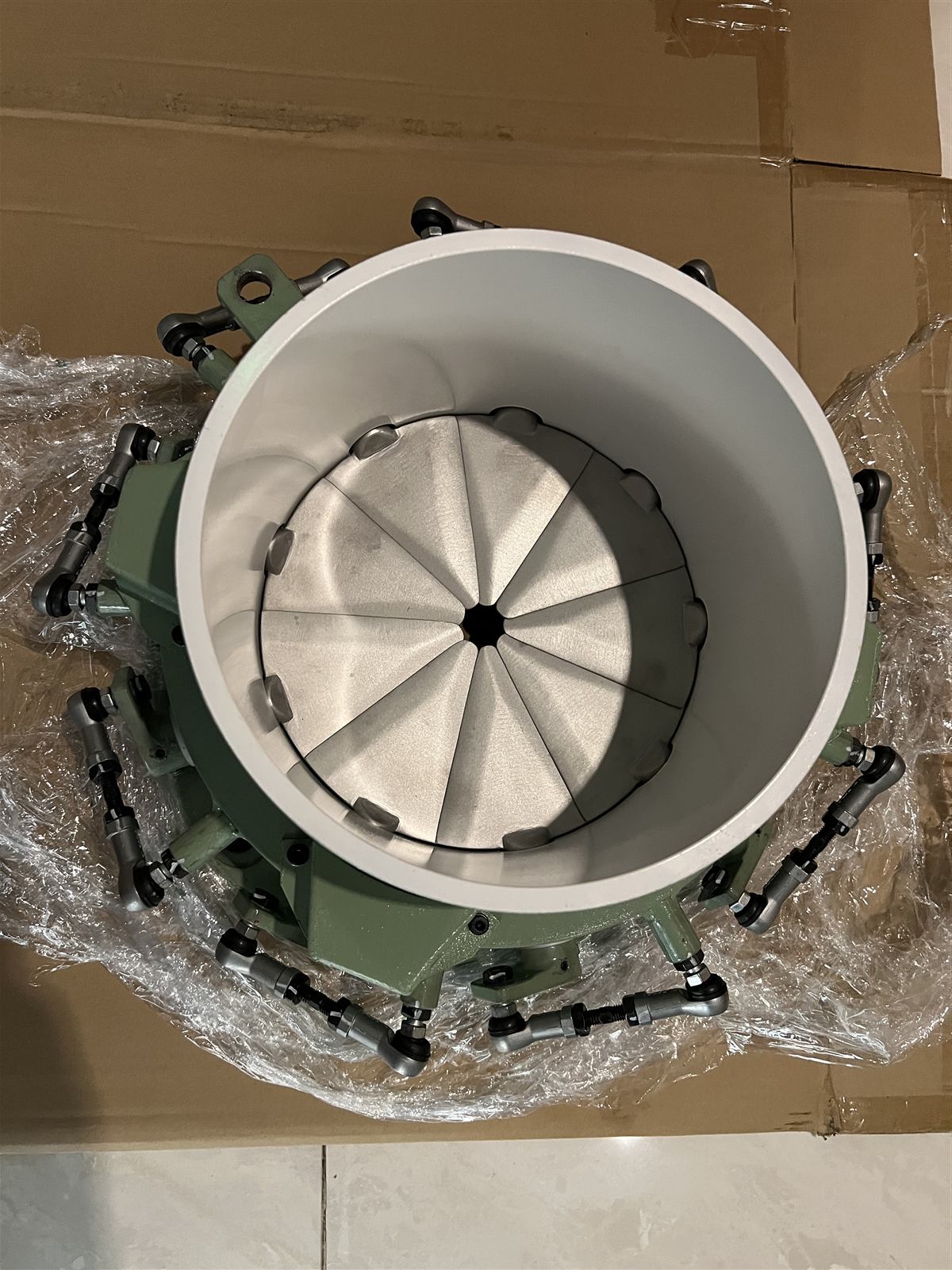
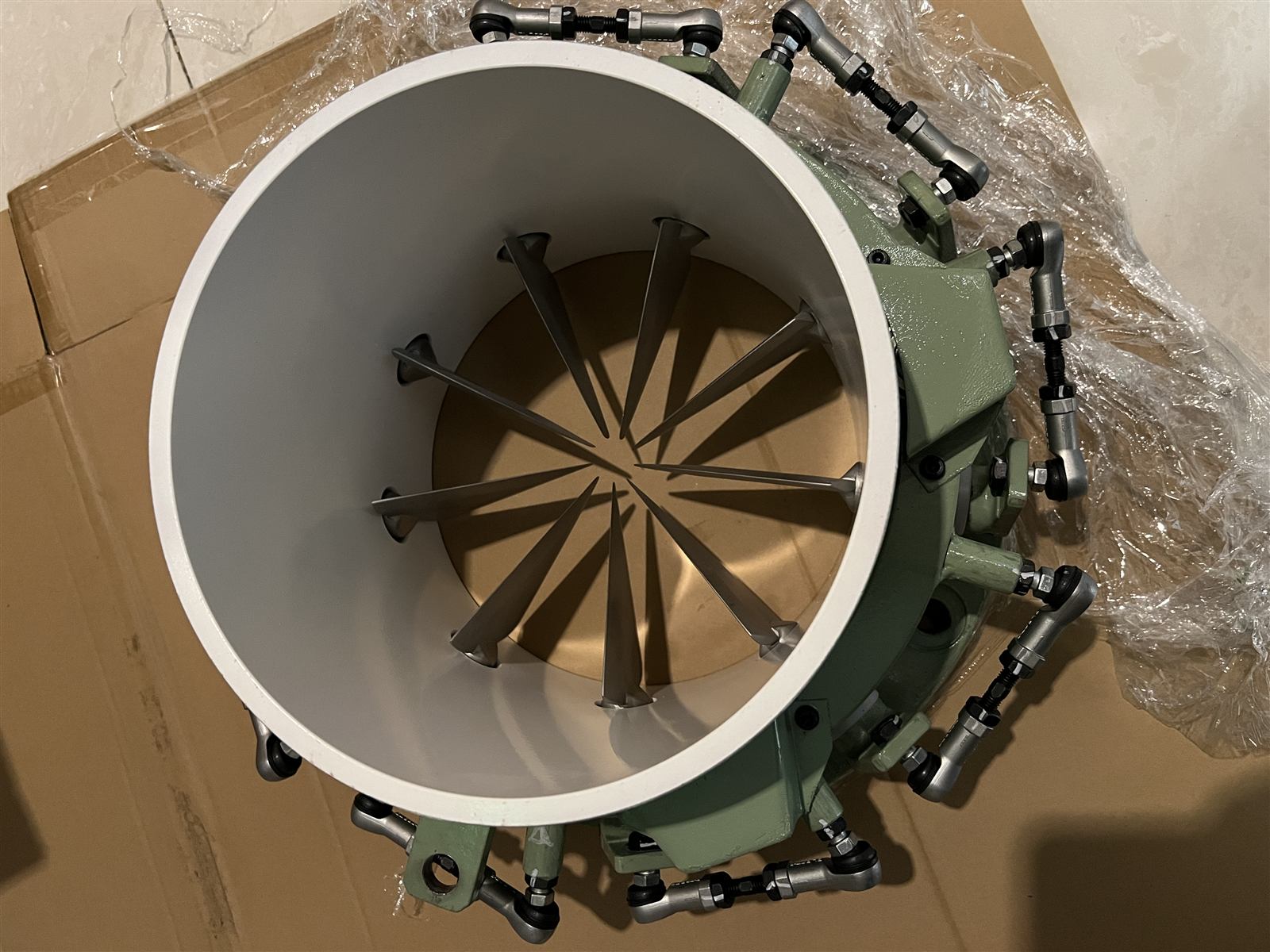
The inlet guide valve (IGV) is the capacity-control element of a centrifugal air compressor. It sits in the suction throat ahead of the first-stage impeller, and its vanes both throttle the incoming air and give it a pre-swirl. That is how the machine follows plant demand without running into surge. When the vanes stick, the linkage wears, or the actuator loses its feedback, the compressor stops controlling cleanly: it hunts, it cannot reach full load, or it trips on surge. Turbomax supplies complete IGV assemblies — valve body, vanes, spindles, linkage and actuator, stroke-checked before shipment.
Why the IGV matters more than it looks
A centrifugal compressor has a characteristic curve: at a given speed, flow and pressure are linked, and below a minimum flow the machine surges. The IGV is the cheapest and most direct way to move the operating point:
- Throttling — closing the vanes reduces mass flow and keeps the machine away from surge when demand drops;
- Pre-swirl — vane angle changes the work done by the first impeller, so capacity can be trimmed without blow-off;
- Fast response — the actuator can move the vanes quickly during load changes, which is what prevents surge trips;
- Efficiency — a correctly positioned IGV avoids running the machine against a closed blow-off valve, which wastes power.
Symptoms of a worn or failing inlet guide valve
- Capacity control hunts — the machine keeps moving between load and unload without a change in demand;
- The compressor cannot reach full load even with the valve commanded fully open;
- Actuator feedback does not match the actual vane position, or the position signal jumps;
- Linkage has visible play, or the vane spindle bushes are worn and the vanes bind;
- Frequent surge alarms during load changes, or surge at a higher flow than before;
- Corrosion or erosion on the vanes, or a vane touching the throat after a bearing or seal repair — a clearance problem that shows up as noise and current fluctuation.
What Turbomax supplies
- Complete IGV assembly — valve body, vanes, spindles, bushes, linkage and actuator as one matched unit;
- IHI range — T2A, TXA, TRA, TRE, T3A and TRX;
- Cameron / Cooper range — including MSG and IR machines;
- Actuator options — pneumatic or electric, matched to the original control signal;
- Stroke check and setting data — open/closed limits and feedback calibration values supplied for commissioning;
- Installation support — fitting sequence, vane clearance check and a start-up check list.
IHI IGV assemblies — T2A, TXA, TRA, TRE, T3A, TRX
Cameron / Cooper / MSG / IR IGV
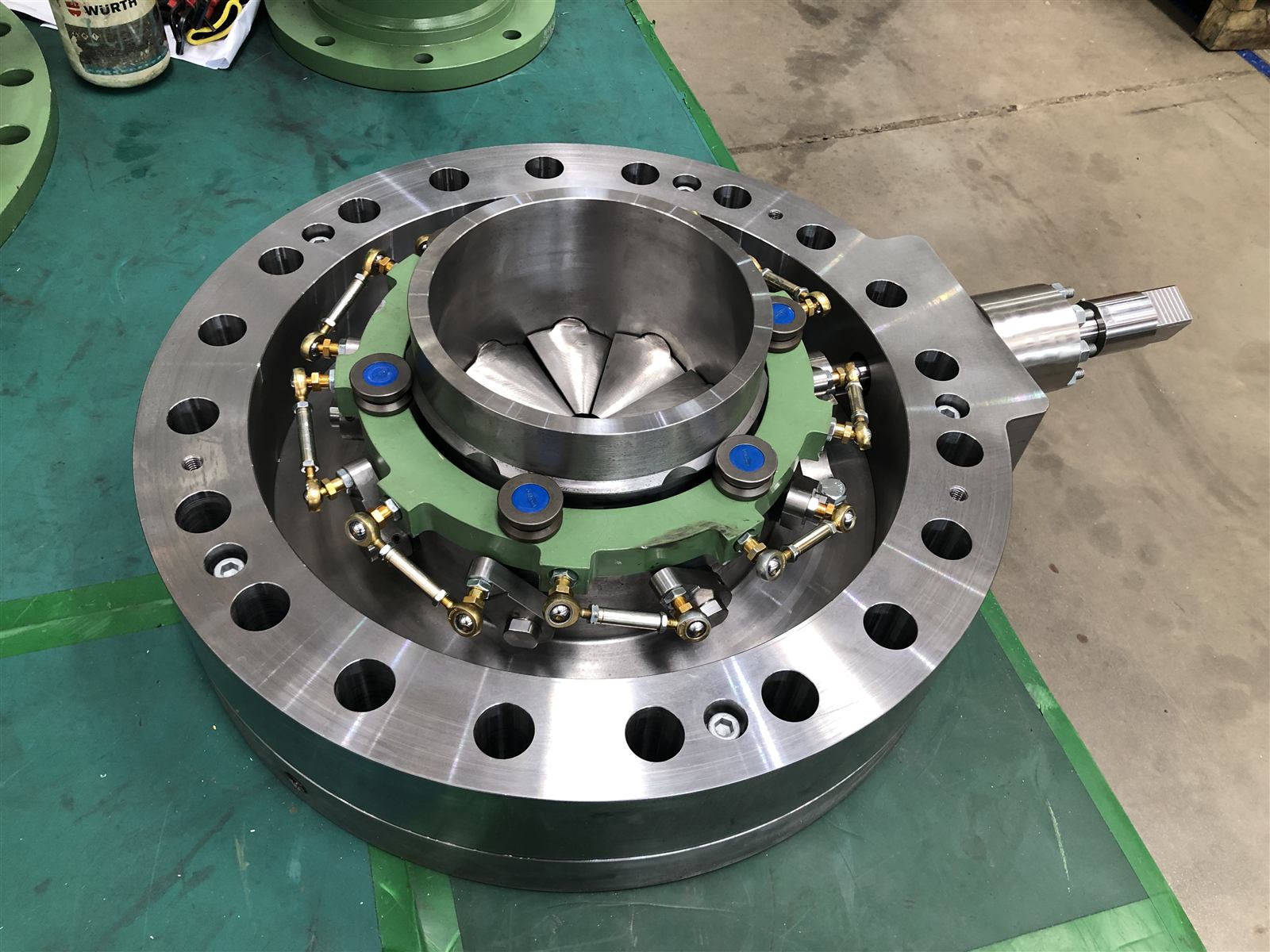
For Cooper, Cameron and IR machines we also supply inlet guide valves, including MSG integrally geared units where the IGV sits in the suction casing ahead of the first pinion stage. The assembly is supplied with the linkage and actuator matched to the existing control signal, so the machine can be re-commissioned without changing the control philosophy.
IGV coverage by machine
| Machine | Inlet guide valve supply |
|---|---|
| IHI T2A / T3A | Complete IGV with actuator — T2A parts list / T3A parts list |
| IHI TXA / TX-A | Complete IGV with actuator — TXA parts list |
| IHI TRA | Complete IGV with actuator — TRA parts list |
| IHI TRE (TRE50–TRE100) | Complete IGV with actuator — TRE parts list |
| IHI TRX (e.g. TRX160) | Complete IGV with actuator — TRX parts list |
| Cameron MSG / Cooper / IR | IGV assembly with linkage and actuator — MSG parts list |
Frequently asked questions
- What does the inlet guide valve do? — It throttles and pre-swirls the suction air, moving the compressor along its curve to match demand and keep a surge margin.
- What are the signs that an IGV needs replacement? — Unstable capacity control, inability to reach full load, actuator feedback mismatch, linkage play, binding vanes and repeated surge during load changes.
- Do you supply the actuator and linkage too? — Yes, the complete assembly is supplied, stroke-checked, with the setting values for commissioning.
- Which models are covered? — IHI T2A, TXA, TRA, TRE, T3A, TRX; Cameron, Cooper, MSG and IR.
- What do you need for a quotation? — Model and serial number, nameplate photo, a photo of the existing valve from the suction side, and actuator details.
How to get a quotation
Send the compressor model, the actuator nameplate and a photo of the existing valve. If the machine is currently surging or unstable, tell us the operating point — that often decides whether the IGV, the actuator or the control loop is the real problem.
Related parts & other compressor models
Overhaul & UpgradingImpellersBearingsDiffusersIntercooler & AftercoolerVibration SensorsTouch PanelT2ATXATRATRET3ATRXMSG
Related technical guides
- What are the parts of a centrifugal compressor called? — IGV, diffuser, impeller, bearings and seals in one photo guide.
- Impeller, diffuser and scroll — how the air path works after the inlet guide valve.
- Surge diagnosis case — how an unstable capacity control was traced and fixed.
- IHI centrifugal compressor series guide — T2A, T3A, TRA, TRE, TRX and TXA comparison.