Turbo / Centrifugal Compressor Cooler Tube Material — Copper, CuNi or Stainless Steel?
How to choose tube and fin material for a centrifugal compressor intercooler / aftercooler — heat transfer, cost, life and the TRE / TRX restrictions, before you order.
When a centrifugal compressor cooler starts leaking or loses performance, buyers usually ask one question: “which tube material should the replacement cooler be made of?” The options — copper, aluminum, cupronickel and stainless steel — differ hugely in intercooler heat transfer efficiency, price and service life, and some combinations simply do not work on certain compressor models. This guide compares all common tube + fin combinations for IHI TRE / TRX and Cameron TA coolers, based on the original compressor-maker material selection chart, so you can order the right cooler the first time.
The full comparison: 7 tube + fin combinations
Ranking is 1 = best, higher number = worse. “Tube” is the water-carrying tube; “fin” is the air-side fin bonded to it. Both sides must work together — a great tube with a weak fin is still a weak cooler.
| Tube material | Fin material | Heat exchange efficiency | Manufacturing cost | Operational life | Remarks |
|---|---|---|---|---|---|
| C1220T copper | Copper | 1 (good) | 2 | 2 | IHI-Sullair standard. Best heat transfer combination — a small cooler can serve a big compressor. |
| C1220T copper | Aluminum | 2 | 3 | 3 | Cheaper but not recommended — life is very short, the fin is the weak point. |
| Aluminum | Aluminum | 3 | 4 | 5 (shortest) | Not offered by IHI-Sullair. Fine for air conditioners, too poor for a compressor in continuous duty. |
| C70600 CuNi (cupronickel) | Copper | 1 | 2 | 2 | The seawater choice. Same efficiency as copper; good for sea water cooling. |
| C70600 CuNi | Aluminum | 3 | 3 | 3 | Cheaper but not recommended — bad material balance: good tube, weak fin. |
| SUS (stainless steel) | SUS | 6 (poor) | 1 (most expensive) | 1 (longest) | Only for TRX aftercooler and TA coolers — not for TRE/TRX intercoolers. Heat transfer is limited to 50–70% of the copper+copper combination, so a much larger cooler is needed. |
| SUS (stainless steel) | Copper | 4 | 2 | 2 | Not for TRE/TRX intercoolers — this combination is also poor. |
| SUS (stainless steel) | Aluminum | 5 | 3 | 3 | Not for TRE/TRX intercoolers. Sometimes seen on air separation (N2 purity) compressors. |
Note: on TA compressors almost any combination can be ordered; TRE / TRX machines have strict limits on the intercooler side, as marked above.
1. Copper tube + copper fin — the standard, and still the best for most plants
This is the IHI-Sullair standard configuration — a C1220T copper tube + copper fin cooler — and it tops the chart for heat exchange efficiency. Practically, that means: for the same cooling duty, a copper+copper cooler can be smaller and lighter than anything else — an important point for TRE/TRX machines where the intercooler space is fixed. Unless your cooling water is aggressive (seawater, brackish, heavily chlorinated), this is the combination to order.
2. CuNi C70600 tube — the right answer for seawater and corrosive cooling water
C70600 (90/10 cupronickel) tubes with copper fins keep the same “1” heat transfer rating as standard copper but resist the cooler tube corrosion that seawater causes in plain copper tubes. If your plant is coastal, on an island, on a vessel or skid, or uses river/brackish water with high chloride content, this is the material to specify. Manufacturing cost is close to standard copper (ranked 2), so you are not paying a stainless-steel premium for it.
3. Stainless steel — longest life, but know what it costs you
A full stainless steel compressor cooler (SUS tube + fin) sounds attractive: longest operational life (rank 1) and excellent corrosion resistance. But it is also the most expensive to manufacture, and its heat transfer is only 50–70% of a copper tube + copper fin cooler — to cool the same air flow you need a noticeably larger cooler. That is why the original maker marks it “OK only for TRX aftercooler / TA cooler”: the aftercooler and TA-series bundles have room for the larger surface, while the TRE/TRX intercooler does not. There is one special case: some air separation (ASU / N2) compressors use SUS + aluminum for nitrogen purity reasons.
4. Why “cheaper” aluminum fins usually cost more
Every copper-tube + aluminum-fin combination in the chart is marked “cheaper but not recommended”. The reason is the material balance: the tube may be excellent, but the aluminum fin is soft, corrodes galvanically against copper, and fails first. Once fins deform or corrode, air-side heat transfer collapses even though the tubes are still fine — and the aluminum fin cooler has to be replaced anyway. For a compressor that runs continuously, the fin is exactly the part you do not want to save money on.
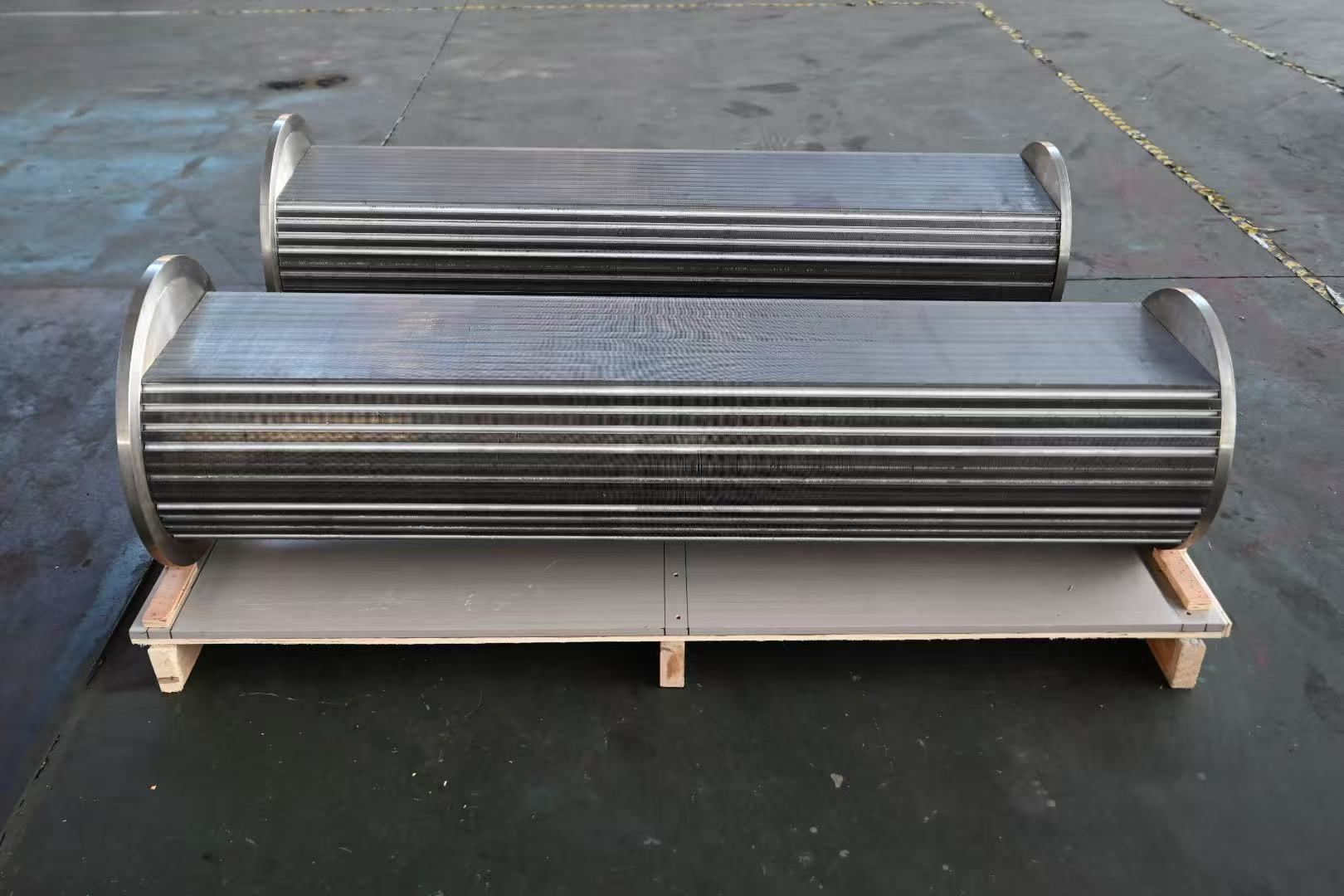
How to decide — 3 questions before you order
- What is your cooling water? Fresh closed-loop water → copper + copper (standard). Seawater, brackish or high-chloride water → C70600 CuNi + copper.
- Which bundle are you replacing? On TRE/TRX, the intercooler must stay copper-based (SUS is not applicable); only the TRX aftercooler can be built in SUS if you accept the bigger size and price.
- What is the real budget? Aluminum fins lower the invoice but shorten life — one extra cooler replacement usually wipes out the saving. See our spare parts buying guide for how to compare quotes on equal terms.
FAQ
What is the best tube material for a centrifugal compressor cooler?
For most freshwater installations: copper tube (C1220T) with copper fins — the IHI-Sullair standard. Highest heat transfer efficiency, compact size, long life.
Which cooler tube material should I use for seawater cooling?
Cupronickel C70600 (90/10 CuNi) tubes with copper fins — same efficiency rating as copper, but resistant to seawater corrosion, at a cost close to standard copper.
Why is a stainless steel cooler not recommended for a TRE/TRX intercooler?
SUS heat transfer is only 50–70% of copper+copper, so the cooler must be much larger — and the TRE/TRX intercooler has no space reserve for that. SUS is acceptable only for the TRX aftercooler and TA coolers.
Are aluminum fins a good way to save money?
No. The fin is the weak point: short life, poor galvanic balance with copper tubes. The saving is usually lost in one extra cooler replacement.
Order a replacement cooler with the right material
Turbomax supplies complete intercooler / aftercooler bundles for IHI T2A, TXA, TRA, TRE, T3A, TRX; Cameron TA2000, TA3000, TA6000, TA9000, TA11000 and MSG; Atlas Copco ZH560–ZH900; FS P300–P600; Hanwha and IR — in copper, CuNi or SUS as your cooling water requires, with the tube and fin combination confirmed before production. Planning an IHI cooler replacement? See the full range on our intercooler & aftercooler page, or read how coolers are replaced in a real job in our IHI TRX160 overhaul case.
Spare parts by model
T2ATXATRATRET3ATRXTA3000TA6000TA9000TA11000MSG
Related reading: A–E service grades (cooler cleaning & replacement schedule) · Impeller, diffuser and scroll — how a stage works