Cameron Centrifugal Compressor History: One Product Line, Five Brand Names (1920–2026)
Joy Manufacturing → Cooper Turbocompressor → Cooper Cameron → Cameron → Ingersoll Rand (MSG® / TURBO-AIR®). The century-long story of the world's most widely used integrally geared oil-free centrifugal compressor — and what that history means when you need spare parts today.
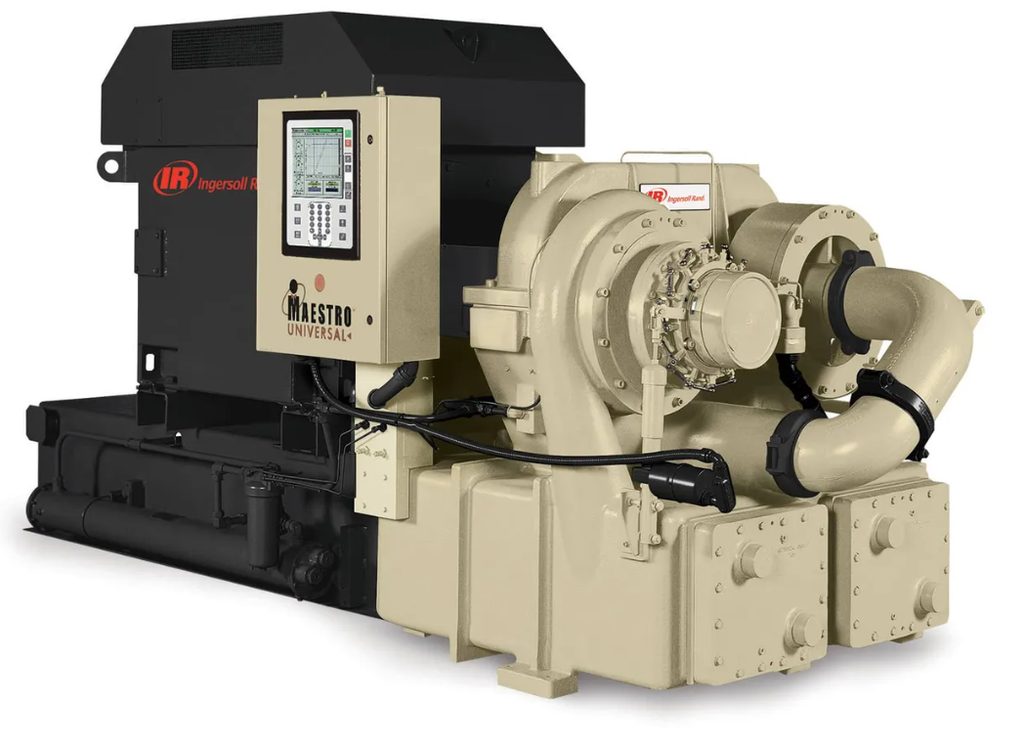
Why this history matters to a parts buyer
Walk into many refineries, air-separation plants, electronics factories and food plants around the world and you will find oil-free centrifugal air compressors whose nameplates read Joy, Cooper Turbocompressor, Cooper Cameron, Cameron or Ingersoll Rand — yet mechanically they are all the same family: the integrally geared centrifugal compressor product line that started in Buffalo, New York in the 1950s.
More than 13,000 of these machines had already been installed worldwide by 2013 (the figure is over 14,000 machines / 40,000-plus centrifugal compressors today by Ingersoll Rand's count). Most of them are still running — and every one of them needs impellers, bull gears, bearings, seals, inlet scrolls and coolers on a predictable overhaul cycle. Knowing which brand era your machine belongs to is the first step to sourcing the right spare parts by part number.
The brand lineage at a glance
| Period | Nameplate brand | What happened |
|---|---|---|
| 1920–1989 | Cameron Iron Works | Founded in Houston (1920) by Harry Cameron & Jim Abercrombie; famous for the world's first reliable ram-type blowout preventer (1922). A separate company from the compressor line — later merged into the same group. |
| 1955–1987 | Joy Manufacturing (Turbomachinery Division) | Turbomachinery division established in Buffalo, NY in 1955; world's first small integrally geared centrifugal air compressor in 1960; commercial plant-air IGC in 1961. |
| 1987–1995 | Cooper Turbocompressor | Cooper Industries acquired Joy's industrial compressor business (1987) and renamed it Cooper Turbocompressor; merged Cameron Iron Works in 1989 (≈US$967M with debt). |
| 1995–2006 | Cooper Cameron (NYSE: CAM) | Spun off as an independent listed company (30 June 1995); compressor business ran as Cooper Turbocompressor, then Cooper Compression (2002). |
| 2006–2015 | Cameron (Cameron International) | Company renamed Cameron in 2006; the compressor line officially carried the CAMERON brand and expanded from plant air into process gas (CO₂, LNG, hydrogen, CO, propylene). |
| 2015–today | Ingersoll Rand — MSG® / TURBO-AIR® | Ingersoll Rand acquired the centrifugal compression division on 1 Jan 2015 for US$850M (850 employees, 12 sites, ≈US$400M sales). Same machines, now branded MSG® and TURBO-AIR®, with the NX generation launched from 2013/2015. (Cameron International itself — the oilfield equipment company — was bought by Schlumberger in 2016.) |
From Buffalo hardware store to world first (1955–1961)
The compressor story begins in 1955, when Joy Manufacturing — then famous for Joseph Joy's mining machines (he held 190 patents) — hired four engineers in Buffalo, New York and opened a turbomachinery department. In 1960 this team built the world's first small integrally geared centrifugal air compressor, and in 1961 launched the first commercial plant-air version. The concept itself came from Dr. Otto Schirl at Demag (Germany, 1948): mount several impellers on pinion shafts around one large bull gear, so every stage runs at its own optimal speed — compact, 100% oil-free, and highly efficient.
That bull-gear-and-pinion architecture is still the layout you see when a tilting-pad bearing set or a new impeller goes into one of these machines during overhaul — which is also why bull gear and bearing work on this line is such a specialised job.
Timeline of the product line
| Year | Milestone |
|---|---|
| 1955 | Joy Manufacturing opens its turbomachinery division in Buffalo, NY |
| 1960–61 | World's first small integrally geared centrifugal air compressor; first commercial plant-air IGC — the "100% oil-free air" category is born |
| 1965 | First packaged (skid-mounted) centrifugal compressor sets |
| 1971 | First four-stage nitrogen recovery / liquefaction train — entry into industrial gas |
| 1980 | World's first microprocessor-controlled centrifugal compressor |
| 1987–89 | Cooper Industries acquires Joy's compressor business (Cooper Turbocompressor) and merges Cameron Iron Works |
| 1988 | First seven-stage, three-pinion two-duty compressor train |
| 1994–95 | TURBO-AIR 2000 launched with 4th-gen microprocessor control; Cooper Cameron Corporation spun off and listed on NYSE |
| 1997–99 | MSG TURBO-AIR 3000 (1997) and MSG TURBO-AIR 6000 (1999) launched |
| 2001–06 | Process-gas era: first natural-gas (2001), CO₂ (2004), LNG mixed-refrigerant (2005) and hydrogen (2006) machines; MAESTRO™ control system (2004); renamed Cameron (2006); manufacturing starts in China (2005) |
| 2008–13 | TURBO-AIR 2040 / 6040, MSG-18, ISO 8573-1 Class 0 certification, first CO machine (2008), first propylene machine (2013), and the NX 12000 platform (2013) |
| 2015 | Ingersoll Rand completes the US$850M acquisition of the centrifugal compression division (1 Jan); production moves to Wujiang, China; NX 8000 launched (750–1,700 kW, 142–283 m³/min) |
| 2019–today | Wujiang MSG manufacturing & test campus opens (2019); the line keeps evolving under Ingersoll Rand after its 2020 merger with Gardner Denver |
The model families — and the abbreviations buyers actually use
In daily plant conversation and purchase orders, the long product names get shortened. Here is how the field names map to the official ones — these are exactly the abbreviations we use across our TA3000 parts list and TA6000 parts list:
| Official model | Field name | Typical spec |
|---|---|---|
| TURBO-AIR 2000 (1994) | TA2000 | 93–260 kW, 3.5–10.3 barg, 14.3–48.1 m³/min — the best-selling plant-air IGC of its generation |
| TURBO-AIR Cooled 2000 (2001) | TAC2000 | Integrated-cooler packaged version of the TA2000 platform |
| MSG TURBO-AIR 3000 (1997) | TA3000 | Packaged oil-free plant-air compressor, three compressible stages |
| MSG TURBO-AIR 6000 (1999) | TA6000 | Larger packaged plant-air platform, up to ~430 m³/min in high-flow versions |
| MSG® series (custom) | MSG | Engineered process-gas machines: 70–3,800 m³/min, up to 18,650 kW, 100 barg — air, N₂, O₂, CO₂, natural gas, H₂, hydrocarbons |
| TURBO-AIR NX 8000 / NX 12000 (2013/2015) | NX | Current generation: 5-axis milled impellers, tilting-pad thrust bearings, MAESTRO™ control, API 614/670/671/672 compliance |
What this means for spare parts and overhauls
- Brand on the nameplate ≠ brand that supports it now. A machine stamped Cooper Turbocompressor, Cooper Cameron or Cameron is serviced today under Ingersoll Rand's MSG®/TURBO-AIR® organization — and by independent specialists like Turbomax.
- These are long-life machines. With 13,000+ units installed since 1961, a huge share of the running fleet is 15–30 years old — deep into the overhaul zone where high-quality alternative parts make economic sense.
- Part numbers never changed. Whether your manual says Joy, Cooper or Cameron, the CAMERON-style part numbers (AAA/AAP prefixes) stay the same across the lineage — which is why we publish a Cameron part-number list (valves, filters, couplings & bearings) and supply against OEM numbers directly.
- Process-gas derivatives share the same DNA. LNG, CO₂, hydrogen and CO machines use the same integrally geared architecture, so overhaul experience transfers across the whole MSG family — see our MSG parts page.
Frequently asked questions
Is Cameron still making centrifugal compressors?
No — but the machines are still being made. Ingersoll Rand bought the Cameron centrifugal compression division on 1 January 2015; the same Buffalo-designed product line continues today under the MSG® and TURBO-AIR® names. (The Cameron oilfield-equipment company itself went to Schlumberger in 2016.)
My nameplate says Cooper Turbocompressor / Cooper Cameron — can you supply parts for it?
Yes. Those are earlier brand eras of exactly the same product line. We supply alternative parts and overhaul service for the whole lineage: Joy, Cooper Turbocompressor, Cooper Cameron, Cameron and Ingersoll Rand TURBO-AIR / MSG machines.
What is TA3000?
The field abbreviation for the MSG TURBO-AIR 3000, a packaged oil-free integrally geared centrifugal air compressor launched in 1997. Likewise TA2000 = TURBO-AIR 2000, TA6000 = TURBO-AIR 6000, TAC2000 = TURBO-AIR Cooled 2000.
Where can I get a parts list with OEM part numbers?
Start with our Cameron valves, filters, couplings & bearings part-number list or the TA3000 / TA6000 spare-parts lists, then send us your machine model and the part numbers you need for a fast quotation.
Need parts for a Joy, Cooper, Cameron, TURBO-AIR or MSG machine?
Turbomax (Suzhou, China) has 10+ years of field experience on this exact product line — alternative spare parts, service kits and full overhaul service, quoted against OEM part numbers and shipped worldwide.